
Standard Penetration Test (SPT) in Soil Investigation
SPT is a widely used field test that records penetration resistance during borehole investigation and provides a repeatable field index for engineering interpretation.
What the SPT record represents
The Standard Penetration Test is performed within a borehole using a split-spoon sampler driven into the soil by a standardized hammering procedure. The recorded blow count is reported as the SPT N-value for the specified penetration interval.
In practice, the N-value should be interpreted together with the soil description, depth, sample information, groundwater observations and other field or laboratory data. It should not be treated as a direct design value without appropriate engineering interpretation and, where relevant, corrections or correlations.
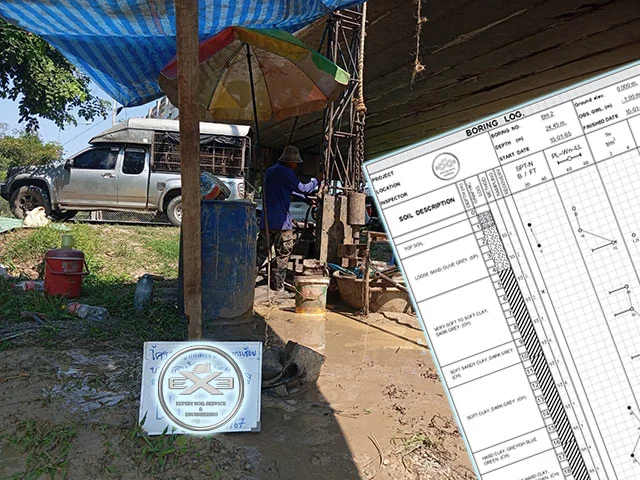
SPT is one part of the borehole record
Depth
The test is linked to the depth at which it was performed.
Soil description
The field description provides context for interpreting the recorded resistance.
Sample
Recovered material may support visual classification and selected laboratory tests.
Groundwater
Observed groundwater conditions can affect interpretation and should be recorded when relevant.
Typical SPT information shown on a boring log
| Item | Why it matters |
|---|---|
| Borehole number | Identifies the investigation location. |
| Test depth | Places the SPT result within the subsurface profile. |
| Blow counts / N-value | Records field penetration resistance for the test interval. |
| Soil description | Provides the material context associated with the result. |
| Sample reference | Links recovered material to laboratory or classification records. |
Need SPT as part of a soil investigation?
Send the project location, borehole scope, target depth and required test interval so the field program can be reviewed.