
Field Density Test in Thailand
In-place density testing for compacted soil and fill, carried out against the project-specified method and reference compaction requirement.
Verify the density achieved in the field
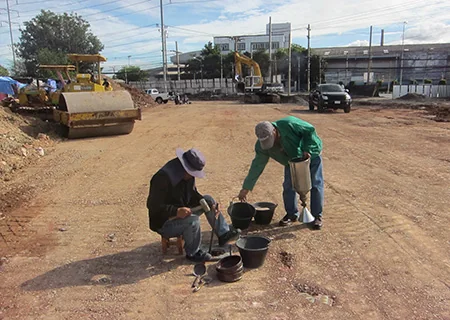
Field density testing is commonly used during earthwork construction to determine the in-place dry density of compacted material. The field result is normally compared with a laboratory reference value and an acceptance percentage stated in the project specification.
The test point, layer or elevation, reference compaction data and acceptance requirement should be available so the reported result can be interpreted correctly.
Information that should be confirmed
Method
Confirm the required field density method, such as the project-specified sand cone procedure.
Reference
Provide the relevant laboratory compaction result or reference density used for comparison.
Acceptance
State the required percentage or acceptance criterion in the construction specification.
Test points
Confirm quantity, location, layer and site readiness for the scheduled visit.
What the result should not be separated from
A field density number by itself is incomplete if the reference maximum dry density, moisture condition, test location or acceptance criterion is unknown. Reporting should allow the project team to identify where the test was carried out and what value the field result was compared against.
If the project requires a particular test standard or report format, state this before the test date so the field procedure and documentation can be aligned with that requirement.
Book field density testing
Send the project location, number of points, test method, reference compaction data and required date.